Global Field Learns from Europe
This year, we completed our first small Erasmus mobility project. Through this project, we had the opportunity to send our coordination team to exciting projects across Europe to learn from them. Here’s a brief recap.
Learning from Global Fields
Our team had the opportunity to visit the Global Field sites in Luxembourg, Vienna, and Innsbruck, where we gained extensive knowledge and learned about numerous educational methods from these projects. In Vienna, at the WeltTellerFeld Christine was able to learn about the alternative method of calculating land area used at this learning center. Particularly interesting were the ways in which the groups are involved in gardening work in the field—an approach from which all Global Fields can learn. In Luxembourg, Benny was able to get a sense of the new Buffet Beds get a better grasp of it and really delve into the logic behind calculating cultivation areas. In fact, this has led us to revise the concept and the figures once again in collaboration with the Luxembourg project, and we hope to release a new version of the “Buffet Beds” soon.
All About Water!
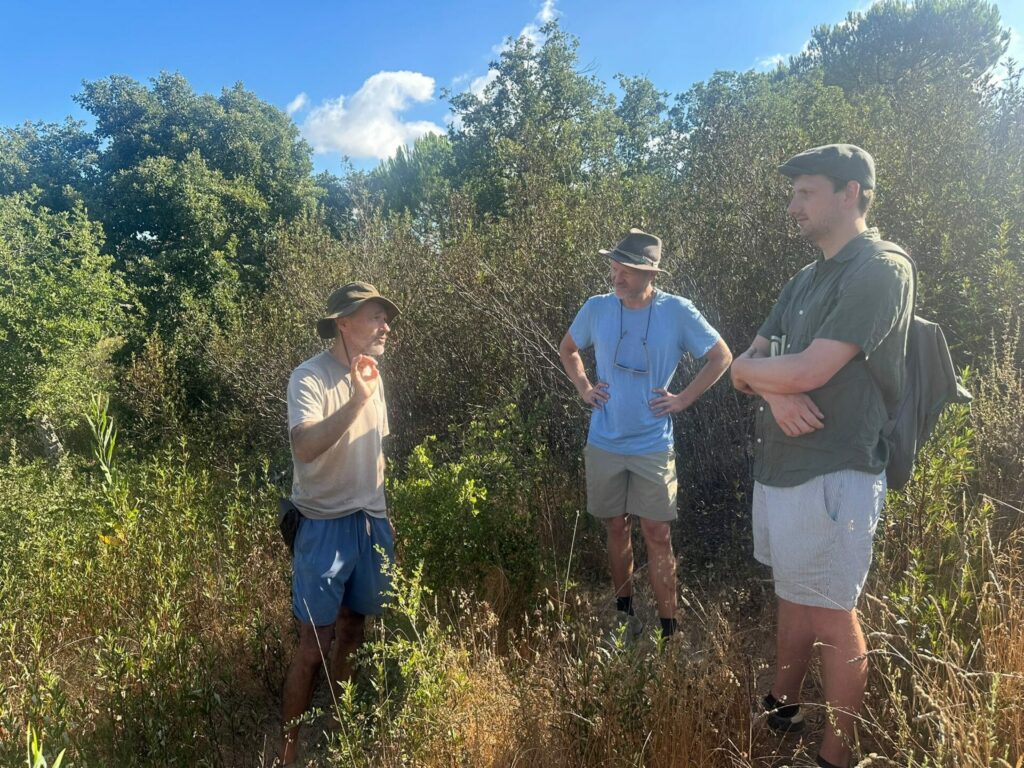
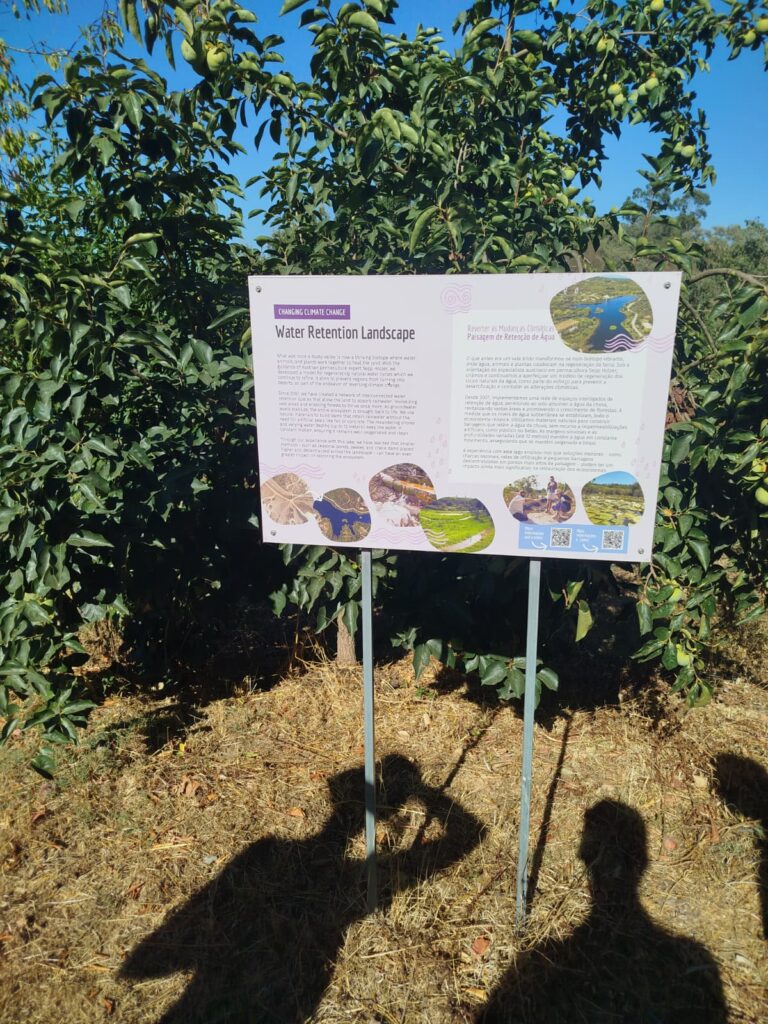
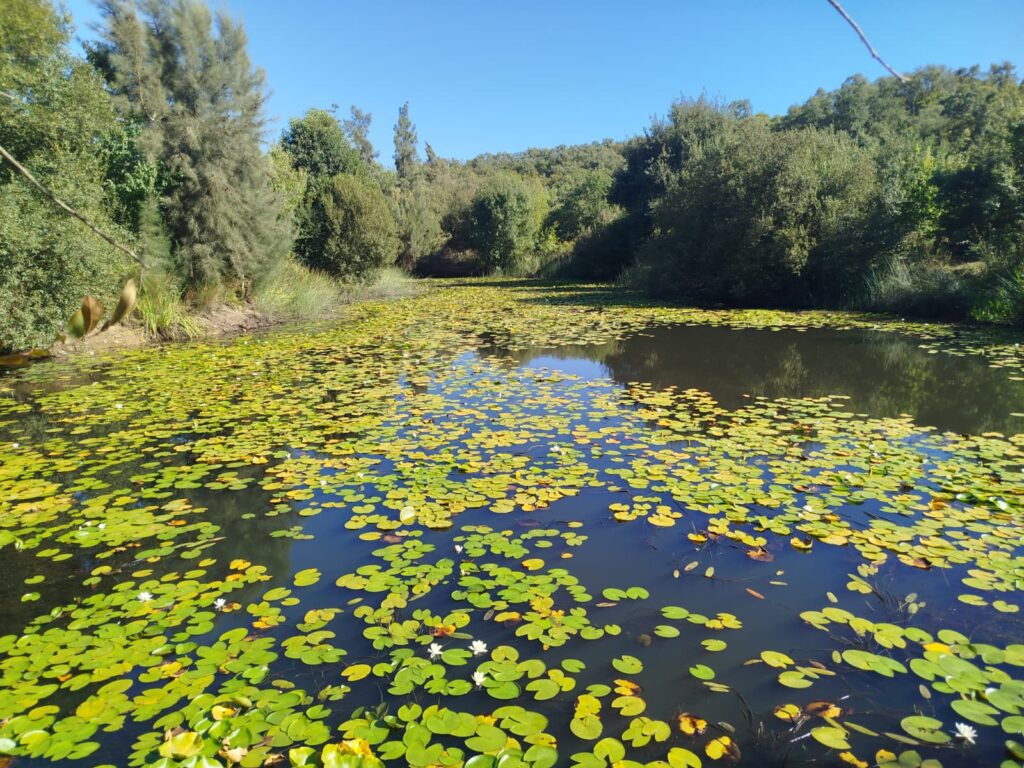
Together with several projects from Odemira, Portugal, we were able to further explore our “Water” theme for the Global Field this year. The Portuguese region suffers from the water-intensive cultivation of fruits and berries, which are also exported to Germany, for example, and consumed here. This “virtual” water consumption was a central aspect of our exchange. As part of our project, we were able to conduct several workshops in Germany with Anja, and Jasper had the opportunity to present the project Project Earth to visit in southern Portugal. How do we deal with water scarcity? How can the small water cycle be closed at the regional level? How do we organize communities to address these challenges at the regional level? What opportunities does synthropic agriculture offer us? All of these aspects were explored during fascinating visits and have been incorporated into our “Water” educational focus.
Open for more!
The study tours have really helped our team understand project work in the context of various European countries. We look forward to further collaboration and are open to connecting with many projects across Europe. Would you like to collaborate with us or visit us? Feel free to reach out!
The EU’s Erasmus+ program made it possible for us to gain these learning experiences in other European countries.