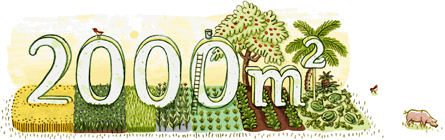
2000 m² in Gilgil, Kenya
In Kenya, the Seed Savers Network has adapted the Global Field concept into a farmer-led learning model that promotes biodiversity conservation, community seed systems, climate resilience and food sovereignty. Through a network of 17 Global Field farmers and 7 flagship learning centres, Seed Savers Network showcases practical solutions that enable smallholder farmers to produce diverse, nutritious food while restoring ecosystems, conserving indigenous seed diversity and strengthening resilient local economies.
The initiative integrates community seed banking, food forests, regenerative agriculture, participatory research, value addition, farmer-to-farmer learning, and sustainable farming innovations, creating living laboratories where farmers, researchers, students, policymakers, and development partners learn together.
Global Field Learning Centers
Seed Savers Network Headquarters, Gilgil
The Mother Global Field
The Seed Savers Network Headquarters in Gilgil, Nakuru County, serves as the Mother Global Field and the national centre for agroecological learning, innovation, and demonstration. The site brings together conservation, research, training, enterprise development, and community learning into one integrated landscape that supports farmer-led transformation of food systems.
The Mother Global Field features a rich botanical garden that conserves indigenous crops, medicinal plants, herbs, spices, and neglected and underutilized species, demonstrating the importance of agricultural
biodiversity in resilient food systems. A thriving food forest showcases regenerative land management practices that improve soil fertility, enhance
biodiversity, conserve water and provide diverse food throughout the year.
The seed savers learning centre hosts a Community Seed Bank where
indigenous and locally adapted seed varieties are conserved, multiplied,
exchanged, and documented. This serves as both a conservation facility and a practical training centre for strengthening farmer-managed seed systems.
To support experiential learning, the headquarters provides visitor accommodation (hostels) for farmers, researchers, students, and development partners participating in training programmes, exchange visits, and international learning events.
The centre also houses a Food forest, Value Addition Unit, where traditional leafy vegetables, herbs, spices and other agricultural products are processed into high-quality, market-ready products. This enterprise reduces post-harvest losses while increasing the value and marketability of local produce.
Nutrition-sensitive agriculture is demonstrated through kitchen gardens,
including innovative vertical gardens that showcase space-efficient food production suitable for households with limited land. These gardens are widely used during farmer training on nutrition, household food production, and urban agriculture.
The Mother Global Field also includes a tool library, providing farmers with access to appropriate agricultural tools for training, demonstrations, and practical learning. This enables smallholder farmers to experience labour-saving technologies that improve productivity while remaining affordable and locally appropriate. As the national hub of the Global Field initiative, the Gilgil Headquarters demonstrates how biodiversity conservation, seed sovereignty, farmer education, enterprise development, and ecosystem restoration can be integrated into one living model for sustainable agriculture.
Seed Savers Network Kakamega Training Centre
A Regional Global Field Demonstratoin Site
Situated on 2.3 acres, the Seed Savers Network Kakamega Training Centre serves as a regional Global Field demonstration and farmer learning hub for Western Kenya.
The centre integrates a food forest, community seed bank, vermicomposting unit, rainwater harvesting systems, and dedicated spaces for participatory research, where farmers, researchers, and development partners jointly test locally adapted seed varieties and
agroecological innovations.
The demonstration fields produce diverse cereals, legumes, traditional vegetables, and opportunity crops, illustrating how crop diversification improves household nutrition, resilience, and biodiversity conservation.
The centre also promotes value addition, enabling farmers to process agricultural products into marketable goods that reduce post-harvest losses and increase household incomes.
As a regional innovation hub, the Kakamega Training Centre provides practical training on community seed banking, agroforestry, soil fertility improvement, compost production, water conservation, and regenerative
agriculture.
The Kakamega Global Field demonstrates how integrated agroecological systems can simultaneously strengthen food security, restore ecosystems, conserve biodiversity, and create sustainable livelihood opportunities.
Featured Global Field Farmers
Beatrice Wangui
Maximizing Productivity on Limited Land
Beatrice Wangui is one of the pioneer Global Field farmers whose 0.60-hectare farm demonstrates how agroecological intensification can transform even rocky landscapes into productive and resilient farming systems.
Her diversified farm integrates cereals, traditional leafy vegetables, fruit trees, livestock, nitrogen-fixing trees, kitchen gardens, and a food forest supported by rainwater harvesting and
organic soil fertility management.
Today, her farm feeds a household of nine while generating surplus produce for local markets. It also serves as a farmer learning site, demonstrating that limited land can sustainably provide food, income, and environmental benefits through agroecology
Petronillah Olunga
Strengthening Community Seed Systems
Petronillah has transformed her two-acre farm into a diversified agroecological enterprise integrating cereals, legumes, traditional vegetables, fruit trees, livestock, beekeeping, and a thriving food forest.
As a Seed Ambassador, she manages a community seed bank that conserves and multiplies locally adapted seed varieties while supplying quality seed to neighbouring farmers.
Her farm demonstrates how community seed systems, biodiversity conservation, and diversified enterprises contribute to resilient livelihoods and stronger local food systems.
Francis Ngiri
Linking Agroecology with Policy
Francis Nigiri combines practical farming with policy advocacy, ensuring that farmers’ experiences influence agricultural policies supporting agroecology, farmer-managed seed systems, biodiversity conservation, and farmers’ rights.
His demonstration farm provides evidence for policymakers while strengthening dialogue between farming communities, government institutions, and development partners.
Real Waithera
Food Forests for Climate Resilience
Real Waithera demonstrates the transformative role of food forests in restoring ecosystems and strengthening climate resilience.
Her farm integrates indigenous trees, fruit trees, perennial crops, medicinal plants, and vegetables within a diverse agroforestry system that improves soil fertility, conserves water, enhances biodiversity, and provides year-round nutritious food.
Martha Njenga
Advancing Planetary Health through Seed Conservation
Martha Njenga combines community seed banking with mushroom production, creating an innovative circular farming system that converts agricultural waste into nutritious food while conserving indigenous crop diversity.
Her work illustrates how biodiversity conservation, sustainable production, and farmer innovation contribute to healthier ecosystems, improved nutrition, and resilient rural livelihoods.
Lilian Ngatia (Nakuru County)
Conserving Biodiversity through Integrated Agroecology
Lilian Ngatia’s Global Field in Nakuru County demonstrates how integrated agroecological farming strengthens household resilience while conserving biodiversity.
Her diversified farm combines cereals, legumes, traditional leafy vegetables, fruit trees, and a food forest supported by compost production and sustainable soil fertility management. Through community seed conservation and farmer-to-farmer learning, Lilian promotes resilient farming practices that improve food security, generate household income, and restore ecosystem health.
Everline Akoth (Kisumu County)
Promoting Nutrition and Farmer-Led Innovation
Everline Akoth has established a thriving Global Field in Kisumu County that showcases diversified food production for improved nutrition and resilient livelihoods.
Her farm integrates traditional leafy vegetables, cereals, legumes, fruit trees, and indigenous seed conservation within an agroecological production system. Through seed saving and practical demonstrations, she supports neighbouring farmers in adopting sustainable farming practices that strengthen food sovereignty and climate resilience.
Moses Masinde (Siaya County)
Strengthening Community Seed Systems
Moses Masinde’s Global Field in Busia County demonstrates how farmer-managed seed systems and agroecological practices contribute to resilient food systems. His farm integrates crop diversity, food forests, compost production, and ecological soil management while promoting the conservation and exchange of locally adapted seed varieties.
His demonstration farm serves as a practical learning site where farmers gain skills in biodiversity conservation, regenerative agriculture, and sustainable food production.
Margaret Khalechi
Building Sustainable Livelihoods through Agroecology
Margaret Khalechi demonstrates how agroecological farming can improve livelihoods while protecting natural resources. Her diversified production system integrates cereals, legumes, traditional vegetables, fruit trees, and sustainable soil management practices that ensure year-round food production. Through composting, organic soil fertility management, and farmer learning exchanges, she inspires wider adoption of climate-smart agriculture and biodiversity conservation within her community.
Jennifer Atieno (Kisumu County)
Advancing Food Sovereignty through Diversified Farming
Jennifer Atieno’s Global Field in Kisumu County combines traditional food crops, indigenous vegetables, fruit trees, and community seed conservation to strengthen food sovereignty and household resilience. Through compost production, ecological soil management, and diversified farming, she has developed a productive system that reduces dependence on external inputs while improving environmental sustainability.
Her farm serves as a demonstration site for farmer-led innovation and sustainable food production
Mary Anekeya
Conserving Indigenous Seeds and Traditional Knowledge
Mary Anekeya is a committed Global Field farmer who champions the conservation of indigenous seed varieties and traditional farming knowledge. Her diversified farm integrates cereals, legumes, traditional leafy vegetables, fruit trees and community seed banking to ensure year-round food production and improved household nutrition. By sharing seed, knowledge, and practical agroecological skills with neighbouring farmers, Mary contributes to strengthening community seed systems, biodiversity conservation, and food sovereignty.
Mama Sauti (Coastal Kenya)
Climate-Resilient Farming in Kenya’s Coastal Region
Based in the coastal region of Kenya, Mama Sauti demonstrates how the Global Field concept can be adapted to diverse ecological conditions. Her farm integrates drought-tolerant indigenous crops, fruit trees, food forests, legumes, and traditional vegetables alongside composting and water
conservation practices. As a community leader and mentor, she promotes climate-resilient agriculture that improves household food security, restores ecosystems, and strengthens community resilience to climate change. Mama Sauti has been practicing the concept for the last 5 years and has community based organization who now take uop the knowledge and disseminate to fellow farmers.
John Kari (Rift Valley)
Fruit Tree Diversity for Nutrition and Sustainable Livelihoods
Kari Johns Global Field in the Rift Valley showcases the transformative role of fruit tree diversification in resilient farming systems. His farm features a wide range of Indigenous fruit trees integrated with cereals, legumes, traditional vegetables, and agroforestry species. The orchard enhances biodiversity, improves soil and water conservation, and provides nutritious food and sustainable income throughout the year.
His farm serves as a demonstration site where farmers learn practical approaches to orchard management and agroforestry.
Global Field School Programme
Inspiring the Next Generation of Agroecology Champions
To expand the impact of the Global Field (2000 m²) concept beyond farming households, Seed Savers Network has established a network of Global Field Schools across Kenya. These schools serve as living classrooms where learners acquire practical knowledge on agroecology, environmental conservation, nutrition, climate resilience and sustainable food production through hands-on learning.
The school Global Fields integrate fruit orchards, traditional kitchen gardens, compost production, rainwater harvesting, food forests, and nutrition education into the school environment. Learners actively participate in establishing and maintaining these demonstration sites, creating ownership while building lifelong skills in environmental stewardship and sustainable agriculture.
These school-based Global Fields also contribute directly to school feeding programmes by providing nutritious fruits and vegetables while promoting healthy eating habits among learners.
Kigogo Primary School
Growing Healthy Learners through Fruit Production
Established in 2021, the Global Field at Kigogo Primary School has become a successful demonstration of school-led agroecology. The school has invested significantly in establishing a diverse fruit orchard comprising mangoes, oranges, pawpaws, guavas, and other locally adapted fruit trees. Alongside the kitchen gardens.
Today, the fruits provide an important source of nutrition for learners while serving as practical teaching resources for agriculture and environmental education. Students and teachers take collective responsibility for maintaining the orchard through watering, manure application, mulching, pruning, and general tree management. This hands-on approach has nurtured a strong culture of environmental responsibility and ownership among learners.
Ndogo Primary School
Integrating Nutrition and Biodiversity
Ndogo Primary School has expanded its Global Field to approximately one acre, creating a diversified learning landscape that integrates fruit trees with a wide variety of traditional leafy vegetables used in the school’s feeding programme.
The project enables learners to appreciate the nutritional value of indigenous vegetables while demonstrating how diversified farming systems contribute to improved diets, biodiversity conservation, and climate resilience. The school continues to expand its fruit orchard and agroecological practices, providing practical lessons in sustainable food production.
Nagum Primary School
Building Climate-Resilient Learning Landscapes
Nagum Primary School has developed a comprehensive Global Field that combines several innovations on water conservation, kitchen gardening and food forest. The school has established fruit orchards, kitchen gardens, composting systems, and rainwater harvesting facilities, creating an integrated demonstration site for sustainable agriculture.
Learners actively participate in compost production, water conservation, vegetable cultivation, and tree management, enabling them to understand circular farming systems while strengthening environmental stewardship. The project also contributes to improved school nutrition through the production of fresh vegetables and fruits.
Kongasis Primary School
Promoting Healthy Soils and Nutrition
The Global Field at Kongasis Primary School focuses on compost production, food forest development, and kitchen gardening as key components of sustainable agriculture.
Learners acquire practical skills in compost preparation, soil fertility improvement, vegetable production, and agroforestry. The kitchen gardens provide fresh vegetables for school meals while demonstrating environmentally friendly food production methods that can be replicated at household level.
Bobo Primary School
Water Conservation for Sustainable Food Production
Bobo Primary School has established a thriving Global Field that integrates rainwater harvesting, fruit tree production, kitchen gardens, and composting into its learning environment.
The rainwater harvesting system provides a reliable water source for irrigating school gardens, ensuring year-round production despite changing climatic conditions. Composting improves soil fertility using locally available organic materials, while fruit trees and vegetable gardens contribute to improved nutrition for learners and serve as practical teaching tools for climate-smart agriculture.
Kivulini Primary School
Established in 2022 through Seed Savers Network, the Kivulini Primary School Global Field focused on planting diverse fruit trees to establish a school food forest. Today, learners benefit from fresh fruits that supplement the school feeding programme while using the site as a practical learning space for agroecology and biodiversity conservation. The school has also begun experimenting with drying surplus fruits for value addition and sale, helping learners develop entrepreneurship and post-harvest handling skills.
Old Bay Primary School
The Old Bay Primary School Global Field was established in 2022 by Seed Savers Network to promote food forests through fruit tree planting. The mature food forest now provides nutritious fruits for learners and serves as a hands-on learning centre for sustainable agriculture. The school is also exploring value addition by drying excess fruits for sale, giving learners practical skills in food processing and agribusiness.
The Seed Savers Network Global Field Schools Programme demonstrates that schools can play a critical role in shaping future custodians of biodiversity, healthy food systems, and climate resilience. By integrating agroecology into everyday learning, these schools provide practical experience in sustainable agriculture while strengthening nutrition, environmental conservation, and community awareness.
Beyond improving access to nutritious food, the programme cultivates leadership, responsibility, and lifelong environmental stewardship among young people. Learners become ambassadors of agroecology, sharing knowledge and practices with their families and communities, thereby extending the impact of the Global Field initiative far beyond the school grounds.